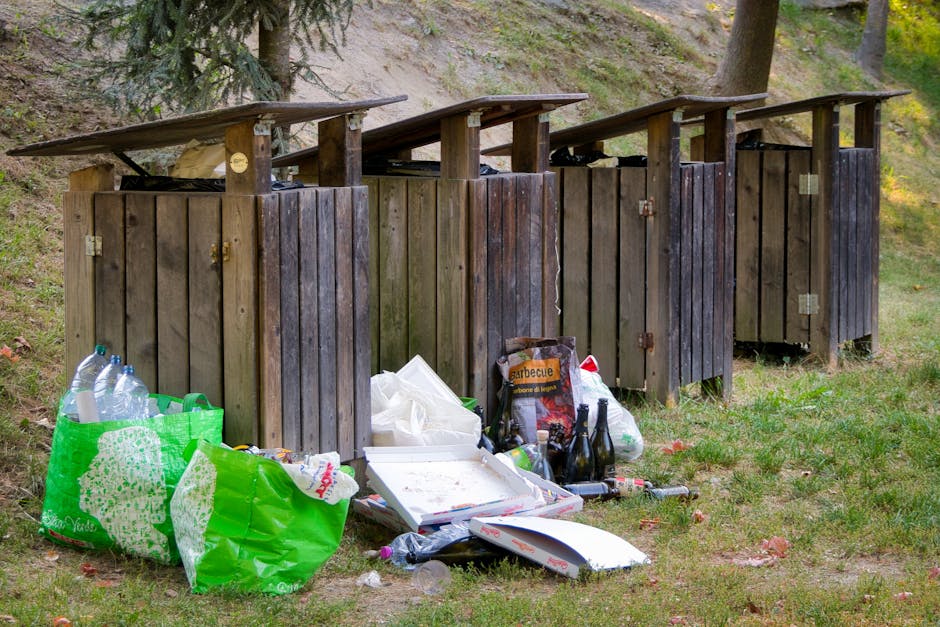
What to know about access problems for Harlesden rubbish jobs
Access problems can turn a simple rubbish collection into a slow, awkward job surprisingly fast. In Harlesden, that might mean a narrow terraced street, a top-floor flat with no lift, a shared driveway blocked by another vehicle, or a skip route that simply does not work with the layout of the property. If you are trying to clear waste from a home, flat, office, garage, loft, or garden, understanding what to know about access problems for Harlesden rubbish jobs can save you time, money, and a fair bit of stress.
This guide explains the real-world access issues people run into, why they matter, how a job is usually planned around them, and what you can do before collection day so the work goes smoothly. It is practical, local, and written for people who just want the rubbish gone without drama. Which, let's face it, is the whole point.
Contents
- Why access problems matter
- How rubbish jobs with access issues are handled
- Key benefits of planning access properly
- Who this is for and when it makes sense
- Step-by-step guidance
- Expert tips for better results
- Common mistakes to avoid
- Tools, resources and recommendations
- Law, compliance and best practice
- Options and comparison table
- Case study or real-world example
- Practical checklist
- Conclusion
- Frequently asked questions
Why What to know about access problems for Harlesden rubbish jobs Matters
Access is not just a minor detail. It shapes how long a clearance takes, how many people are needed, what equipment can be used, and whether the waste can be moved safely at all. In tight residential streets or older buildings, a team may need to carry items farther, work around stairs, or break down bulky waste before removal. That all affects the final plan.
In Harlesden, access can be especially important because many properties are a mix of flats, converted houses, small terraces, and busy roadside locations. A job that looks straightforward from the front door can become more complicated once you factor in narrow hallways, shared entrances, parking restrictions, or a basement stairwell that feels steeper than it looked on the photo. You know the type.
When access is underestimated, the common knock-on effects are delays, extra labour, revised timings, or the need to split the clearance into stages. None of that is ideal. The good news is that most access issues are manageable if they are identified early and described properly.
Key point: access problems are usually not deal-breakers. They are planning problems. And planning problems can usually be solved with the right information and the right service setup.
How What to know about access problems for Harlesden rubbish jobs Works
When a rubbish collection is assessed, the service provider will usually look at three things: what needs removing, where it is located, and how easy it is to reach. That last part is where access comes in. The team may ask questions such as:
- Is the waste inside the property, outside, in a rear garden, or in a loft?
- Are there stairs, narrow corridors, low ceilings, or sharp turns?
- Can a vehicle stop close to the load point?
- Is there parking space, loading access, or a permit-controlled road?
- Will items need to be carried through communal areas?
In a good setup, the job is matched to the conditions on site. For example, a clearance from a ground-floor garage is very different from a loft clearance in a narrow Victorian property. A garden pile at the back of a house may be easy to reach, while a flat clearance with multiple flights of stairs may require more time and care. Small details make a big difference.
That is why clear communication matters. If you are unsure whether the access is "good enough," say so. If the path includes a tight passage, mention it. If there is a coded gate or a neighbour's shared entrance, say that too. A five-second note can prevent a fifty-minute headache.
Some jobs also need a different method entirely. For instance, furniture that can be carried out in one piece may instead need dismantling before removal. Builders' rubble may need to be moved in smaller loads. Heavy wardrobes, white goods, or mixed waste from a house clearance may all need a slightly different route through the property. That is normal.
Key Benefits and Practical Advantages
Once access is properly planned, everything tends to run more smoothly. That sounds obvious, but in the real world it is what separates a tidy job from a messy one.
- Faster clearance: Teams can move waste more efficiently when they know the route and the obstacles in advance.
- Lower risk of damage: Tight corners, painted walls, bannisters, and floor coverings are easier to protect when access is understood first.
- Safer lifting and carrying: More accurate planning reduces rushed lifting, awkward twisting, and avoidable strain.
- Better pricing accuracy: Access details help produce more realistic quotes, so there are fewer surprises later.
- Less disruption: Neighbours, tenants, office staff, and family members experience less inconvenience when the job is organised properly.
There is also a less obvious benefit: confidence. When you know the route, the timings, and the limitations, you can relax a little. You do not spend the morning worrying whether a sofa will fit through the stairs or whether the van will be stuck half a street away. Truth be told, that peace of mind is worth a lot.
If the job is linked to a broader clearance, such as a house clearance, flat clearance, or loft clearance, access planning becomes even more valuable because there is often more volume, more furniture, and more moving parts.
Who This Is For and When It Makes Sense
This topic matters to anyone arranging waste removal in a property where space is limited or the route out is not straightforward. That includes private homeowners, landlords, tenants, letting agents, office managers, builders, and small business owners.
It is especially relevant if you are dealing with:
- top-floor flats without lifts
- shared entrances or communal hallways
- narrow terraced streets with limited stopping space
- rear garden waste that must be carried through the property
- bulky items that need dismantling before moving
- builder's waste stored in awkward or restricted areas
- offices with internal stairs, security access, or fixed opening hours
People often think access problems only matter for very large jobs. Not really. Even a small collection can become awkward if the waste sits at the back of a property, behind locked gates, or up three flights of stairs. A single sofa, a few broken cabinets, or a pile of bagged rubbish can still be tricky if the route out is poor.
If you are comparing service types, it may help to look at pages like furniture disposal, garage clearance, or waste removal to match the job to the kind of access you actually have.
Step-by-Step Guidance
Here is a practical way to handle access issues before collection day.
- Walk the route from waste to vehicle. Do not just look at the items. Check the whole path: doors, halls, gates, stairs, corners, and any narrow turns.
- Measure the awkward bits. A tape measure helps with door widths, stair landings, and the size of bulky items. No need to be obsessive, just sensible.
- Note the obstacles. Low branches, parked cars, bins, locked gates, a broken lift, or a shared corridor all matter.
- Check vehicle access. Can a van stop nearby, or will the team need to carry waste a longer distance?
- Tell the provider early. Be specific. "There are stairs" is useful. "There are 28 narrow steps and no lift" is much better.
- Separate bulky items from loose waste. This makes loading easier and helps the team plan what needs dismantling.
- Clear the route where you can. Move shoes, plant pots, boxes, bikes, and anything else that blocks the way.
- Confirm timing and access arrangements. If a gate code, concierge, or neighbour approval is needed, get that sorted before the crew arrives.
A useful habit is to take a few quick photos. One of the item pile, one of the access route, and one of the street outside can tell a provider more than a long message ever will. You do not need a perfect picture. Just enough to show what is going on.
If the job involves a property with more moving parts, such as a home clearance or furniture clearance, a few photos can make the quote more accurate and the visit far smoother.
Expert Tips for Better Results
Here are the sorts of things experienced teams tend to look for straight away.
- Assume the route is tighter than it looks. What appears roomy in a phone photo can feel much smaller when carrying a mattress or wardrobe.
- Think about turning space. A straight corridor is one thing. A turn at the top of the stairs is another altogether.
- Protect surfaces early. If you are worried about scuffs, clear mats or simple floor protection can help a lot.
- Plan for weather. Wet steps, muddy garden routes, and windy courtyards make handling slower and less tidy.
- Be honest about difficulty. If an item was already hard to move once, say so. That small detail can change the whole plan.
- Consider disassembly. A bed frame, wardrobe, desk, or shelving unit may be far easier to remove in pieces.
One small but useful tip: if parking is tight in the area, check whether the van can legally and safely stop close enough for loading. Do not assume it will work out on the day. Often it does, but not always, and a little caution saves a lot of waiting about on the pavement.
If your clearance is tied to a business site, pages such as office clearance and business waste removal are useful starting points because they often involve access control, schedules, and other people using the space at the same time.
Common Mistakes to Avoid
Most access problems are not caused by the property itself. They are caused by assumptions. That is the awkward truth of it.
- Giving vague descriptions. "It should be fine" is not a plan. Clear access details are always better.
- Forgetting about communal areas. In flats, hallways, lifts, and stairwells can be as important as the room where the waste sits.
- Ignoring parking restrictions. If the van cannot get near the property, the job may take longer than expected.
- Not mentioning heavy or awkward items. A couple of broken units can be manageable. A cast-iron bath or large sofa is a different matter.
- Leaving access checks until the crew arrives. That is when small issues become frustrating delays.
- Assuming every waste type is handled the same way. Garden waste, builders' debris, old furniture, and office junk often need different handling methods.
A common one is forgetting the inside route while focusing only on the street outside. "There's parking on the road" sounds helpful, but if the waste is down a cramped stairwell and through a back kitchen, the real issue is the indoor route. Small difference, big impact.
Tools, Resources and Recommendations
You do not need specialist gear to prepare for most rubbish jobs, but a few simple tools help:
- a tape measure for doors, stairs, and bulky items
- a phone camera for photos of the access route
- sticky notes or labels if items need sorting before removal
- gloves if you are moving light waste yourself before the collection
- a torch for lofts, basements, or dim garden areas
From a planning point of view, it also helps to keep the following information ready before you request a quote or book a time slot:
- the type of waste
- approximate volume
- where the waste is located
- whether there are stairs or lifts
- parking and loading conditions
- any time restrictions or building rules
If you are unsure how your job fits the different service types, the site pages for builders waste clearance, garden clearance, and office clearance can help you think through the scale and access conditions before you commit.
For anything involving pricing or service limits, it is also sensible to review pricing and quotes and the relevant terms and conditions so you understand what is included and what might change if the access is more difficult than expected.
Law, Compliance, Standards, or Best Practice
Access planning is not only about convenience. It is also tied to safe working practice. In the UK, waste should be handled responsibly, and anyone arranging removal should be careful about who is taking the waste, how it is being moved, and whether the work can be done without creating avoidable risk.
In practical terms, good practice usually means:
- making sure the route is safe for workers and occupants
- avoiding blocked fire exits, where relevant
- not carrying items in a way that could damage the property or cause injury
- being honest about weight, size, and access restrictions
- using appropriate lifting methods and team size for the task
If the collection is taking place in a shared building or business premises, the access plan should respect building rules and other occupants. That may mean limited hours, lift bookings, entrance codes, or coordination with a concierge. Nothing exotic, just sensible organisation.
It is also worth checking that the provider works in line with their own safety and insurance commitments. The pages on health and safety policy, insurance and safety, and recycling and sustainability can give a clearer sense of standards and responsible working practices.
For customers who value transparency, about us is also useful background reading. It helps you judge whether the service feels like a proper operation rather than a quick, vague arrangement. And with access-heavy jobs, proper operations matter.
Options, Methods, or Comparison Table
Not every access problem needs the same solution. Here is a simple comparison of common approaches.
| Method | Best for | Pros | Watch-outs |
|---|---|---|---|
| Direct carry-out | Ground-floor waste, clear hallways, easy parking | Fast and straightforward | Not suitable for awkward stairs or long carry distances |
| Partial dismantling | Bulky furniture, wardrobes, beds, desks | Makes tight access manageable | Takes extra time and careful handling |
| Staged removal | Large clearances or restricted time windows | Reduces disruption and fits building rules | May require multiple visits |
| Long-carry collection | Rear gardens, difficult parking, back-of-house access | Solves problems where the vehicle cannot stop close by | More labour and longer loading time |
| Specialist access planning | Top-floor flats, basements, tight stairwells, complex sites | Improves safety and accuracy | Needs honest information upfront |
If your waste is mixed and the access is awkward, the right method is usually the one that reduces risk first and speed second. That may sound unglamorous, but it works. Fast is good. Safe and fast is better.
Case Study or Real-World Example
Imagine a flat in Harlesden with a sofa, two broken chairs, and a pile of box waste that needs removing from a second-floor apartment. On paper, that sounds fairly ordinary. Then you learn there is no lift, the stairwell bends tightly at the landing, and the building entrance opens onto a busy road with limited stopping space.
In that situation, the job plan changes straight away. The team may need a clearer parking arrangement, extra carrying time, and a decision on whether the sofa should be split down before moving. The occupant may also need to clear the hallway of shoes, planters, and a bike that was awkwardly parked by the front door. Happens all the time, honestly.
Because the access was explained properly in advance, the crew arrives ready. They bring the right number of people, protect the route where needed, and complete the job without a lot of back-and-forth. If the same job had been booked with no access notes, the day could easily have run long, and the quote might have needed adjusting on site.
The lesson is simple: access details are not paperwork noise. They are operational information. The more accurate they are, the smoother the removal.
Practical Checklist
Use this before booking or confirming a rubbish job in Harlesden.
- Have I described exactly where the waste is located?
- Have I mentioned stairs, lifts, gates, or narrow corridors?
- Do I know whether a van can stop close enough to load safely?
- Have I shared any parking restrictions or permit issues?
- Are bulky items likely to need dismantling?
- Is there anything in the route that could block movement?
- Do building rules affect the time or method of collection?
- Have I taken photos of the items and the access route?
- Have I checked whether the job is a house, flat, loft, garage, garden, or office clearance?
- Have I reviewed the provider's safety, pricing, and service details?
If you can tick most of those boxes, you are already ahead of the game. And if you cannot, that is fine too. It just means you have a few useful details to gather before the booking is finalised.
Conclusion
Access problems do not have to derail rubbish removal in Harlesden. They just need to be identified early, described clearly, and planned for properly. Once you understand the route, the obstacles, and the likely carrying distance, the whole job becomes more predictable. Less guesswork, fewer surprises, better results.
Whether you are clearing a flat, house, office, loft, garage, or garden, the smartest move is to treat access as part of the job rather than an afterthought. That single mindset shift makes a big difference. And it usually saves a bit of money and a lot of hassle too.
Get a free quote today and see how much you can save.
When the rubbish is finally gone and the space feels open again, the awkward bits of planning fade pretty quickly. What stays is the relief. That, more than anything, is why getting the access right matters.
Frequently Asked Questions
What counts as an access problem for a rubbish job?
An access problem is anything that makes it harder to move waste from its location to the vehicle. That can include stairs, tight hallways, locked gates, poor parking, long carry distances, or bulky items that need dismantling.
Do I need to mention access issues when I ask for a quote?
Yes. The more accurate the access details, the more useful the quote will be. If you leave out stairs, parking issues, or a rear-garden carry, the final plan may not match the real job.
Can rubbish still be removed from a flat with no lift?
Usually, yes. It just needs more planning. A top-floor flat without a lift often means more carrying time, more effort, and sometimes the need to break down larger items first.
What if the van cannot park right outside my property?
That is common in busy streets. The team may still be able to complete the job using a longer carry route, as long as it is safe and practical. It should be mentioned early, though.
Should I dismantle furniture before the collection?
Only if it helps and you are comfortable doing it safely. Many bulky items can be removed intact or partly dismantled by the team, but it is useful to flag items such as beds, wardrobes, and desks in advance.
How do I explain awkward access clearly?
Be specific and plain. Say where the waste is, how many stairs there are, whether there is a lift, whether parking is restricted, and whether there are narrow turns or shared entrances.
Are access problems more common in older Harlesden properties?
They can be, yes. Older homes and converted buildings often have tighter stairs, narrower hallways, and less convenient loading access. That does not make removal difficult beyond solution, but it does mean planning matters more.
Will access problems make the job more expensive?
Sometimes, because they can require more labour or time. But not every access issue causes a big increase. The key is giving honest information early so the pricing reflects the real work involved.
What photos should I send before the job?
Photos of the waste, the route out, stairs, gates, and the parking situation are most useful. Even a few quick pictures on a phone can prevent misunderstandings later.
Can access problems affect same-day rubbish removal?
Yes. Same-day bookings can still work, but difficult access may limit what can be done or how quickly it can be completed. If the access is awkward, booking a little more time is usually wise.
What type of clearance jobs are most affected by access?
Flat clearances, loft clearances, house clearances, office clearances, and garden clearances often involve the most access variables because waste may be spread across several rooms or outdoor areas.
What should I do if I am not sure whether access is good enough?
Describe it anyway. A decent provider can usually tell from a short explanation or a few photos whether the job is straightforward, slightly awkward, or likely to need extra planning. Better to ask than assume.